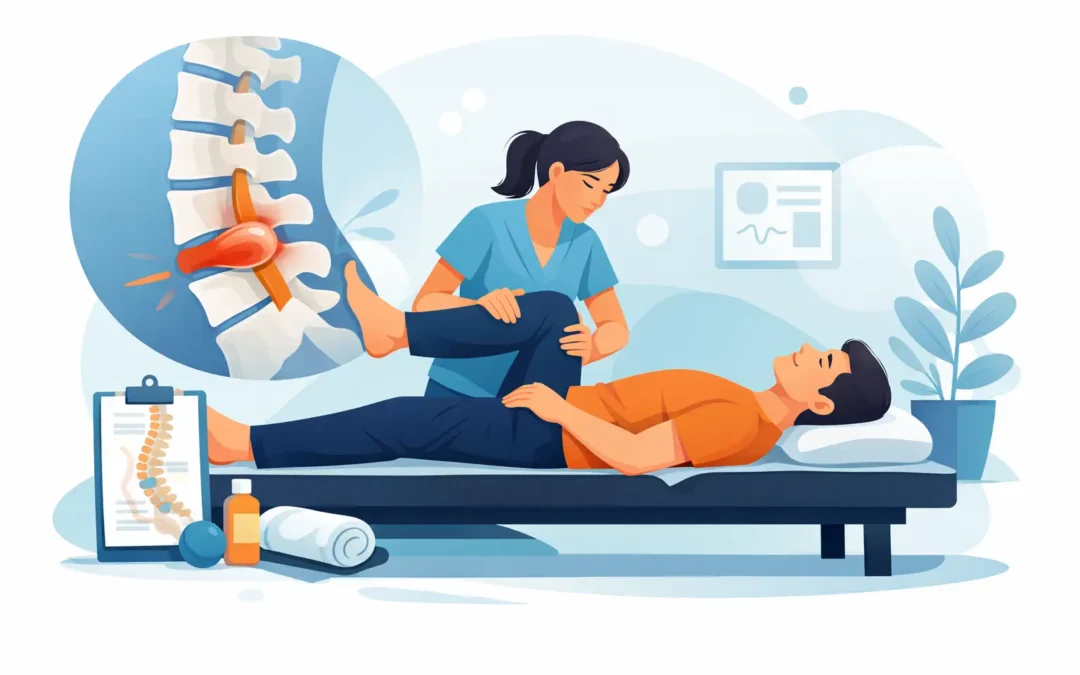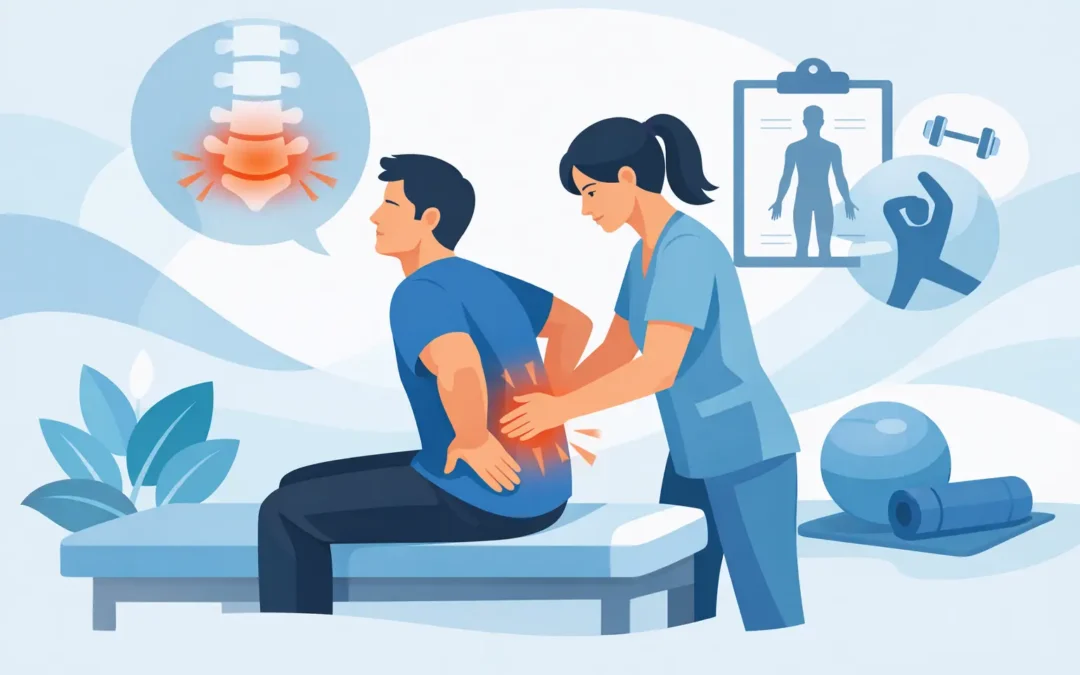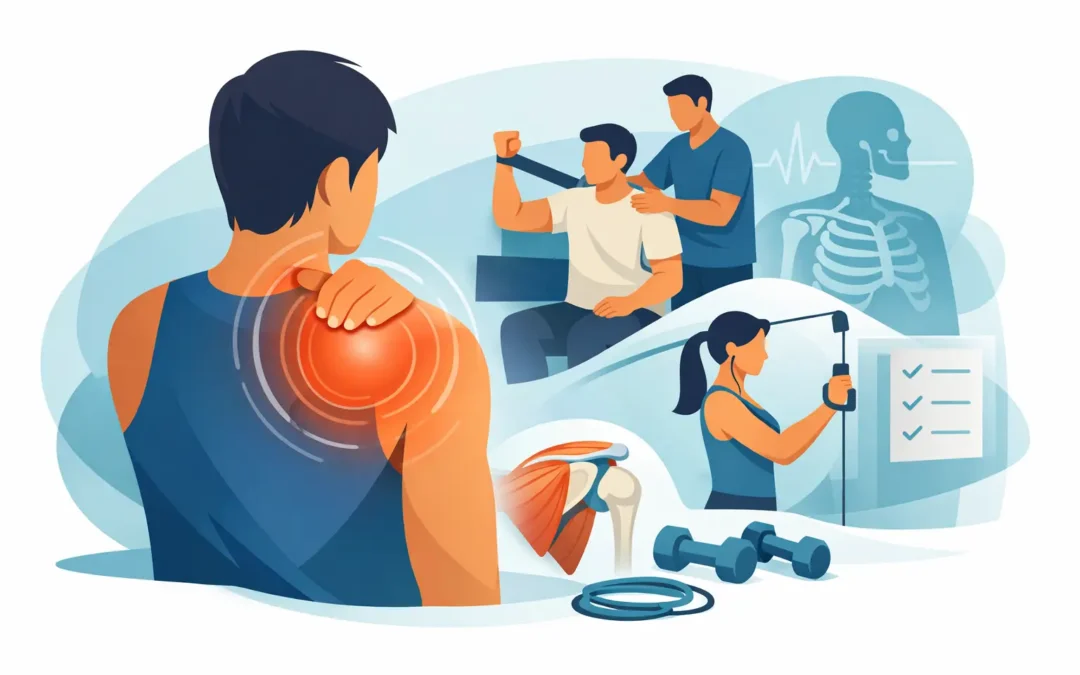
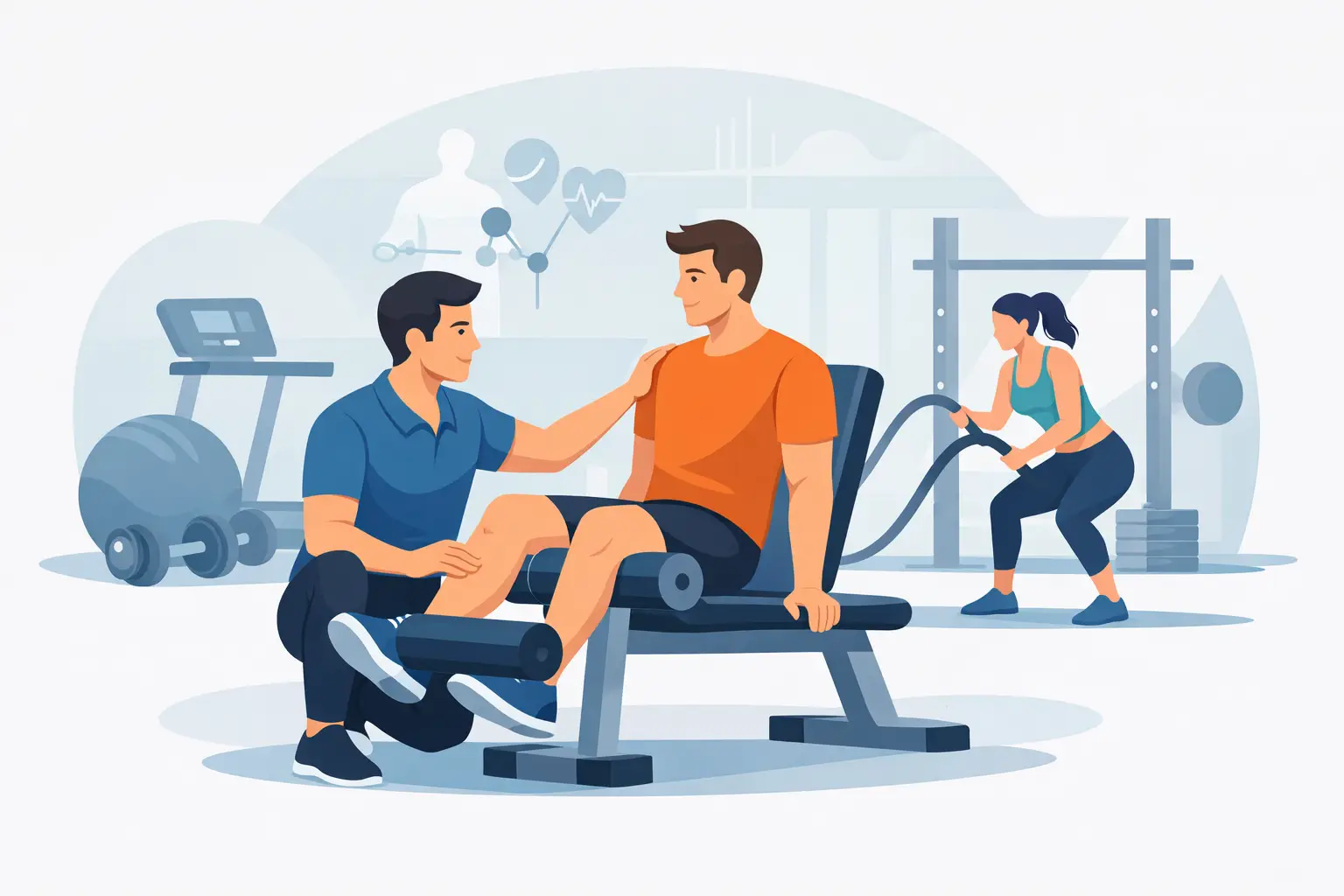
A gym based rehabilitation programme should not feel like being left alone with a sheet of exercises and a timer. If you are recovering from injury, surgery or persistent pain, the gym is not simply a place to get fitter – it becomes a controlled environment where movement is tested, rebuilt and progressed with purpose.
That distinction matters. Many people can perform exercises. Far fewer are doing the right exercises, at the right stage, with the right load and the right technique for their condition. Good rehabilitation is not about making you tired. It is about making you better.
What a gym based rehabilitation programme actually means
A gym based rehabilitation programme is a structured, clinically guided plan that uses gym equipment, functional exercises and progressive loading to restore strength, mobility, control and confidence after injury or surgery. It sits between early-stage treatment and full return to normal activity, although for some people it begins much sooner than they expect.
The key word is progressive. Early rehabilitation may focus on reducing irritability, restoring range of movement and improving basic muscle activation. Later stages usually need more than a resistance band by the sofa. If your goal is to return to running, lifting, football, tennis, long workdays on your feet or simply using stairs without pain, your body needs to tolerate real demands.
That is where gym-based work comes in. It allows a physiotherapist to scale movement in a measurable way, using variables such as load, speed, range, volume and stability demands. Instead of guessing whether you are ready, we can assess it.
Why gym rehabilitation is often the missing link
A common problem in musculoskeletal care is the gap between feeling a bit better and being ready for life again. Pain may have settled, but the tissue capacity, movement quality and confidence needed for daily life or sport are often still lagging behind.
This is especially true in conditions such as ACL reconstruction, Achilles tendinopathy, rotator cuff-related shoulder pain, low back pain, ankle sprains and post-operative knee or hip rehabilitation. Research across sports medicine and orthopaedic rehabilitation consistently supports progressive resistance training and functional loading as central parts of recovery. We see this reflected in journals such as BJSM and JOSPT, where successful rehabilitation is repeatedly linked to criteria-based progression rather than passive treatment alone.
In practical terms, if you stop rehabilitation as soon as pain eases, you may feel improved but still be underprepared. That is often when re-injury happens, or when small limitations become persistent frustrations.
A good programme is built around assessment, not assumption
Not every sore knee needs the same squat. Not every shoulder needs the same band routine. A principled gym based rehabilitation programme starts with a detailed assessment of the person in front of us.
That means understanding the diagnosis, but also the movement pattern, the training history, the irritability of symptoms, previous injuries, work demands, recovery capacity and goals. A recreational runner returning after calf strain has different needs from a parent recovering from lumbar pain, even if both are broadly working on lower-limb strength and trunk control.
This is why ethical physiotherapy avoids generic protocols where possible. Evidence gives us direction, but individual response shapes the plan. Two patients with the same MRI finding may need very different progressions depending on pain behaviour, confidence and baseline function.
What happens inside a gym based rehabilitation programme
The programme usually develops in phases, although these are not rigid boxes. Early on, the emphasis may be on restoring joint movement, reducing fear of movement and reintroducing load in a tolerable way. For some patients that might mean supported squats, split-stance exercises, isometric calf work, cable rows or simple carry variations.
As capacity improves, exercise becomes more specific. Strength work may become heavier. Balance challenges may become less controlled. Movement speed may increase. Single-leg tasks, pulling and pushing patterns, rotational control, hopping, landing or change-of-direction drills may be introduced depending on the goal.
What matters is not whether an exercise looks impressive. What matters is whether it solves the problem in front of us. Sometimes a leg press is exactly the right step after surgery because it builds confidence and load tolerance in a controlled range. Sometimes it is not enough because the person ultimately needs to absorb force, rotate, sprint or decelerate.
A strong programme also includes objective markers. These might include pain response over 24 hours, range of movement, rep quality, strength symmetry, endurance, walking tolerance, hop testing or return-to-running criteria. Progress should be based on what your body demonstrates, not on arbitrary timelines alone.
It is not just for athletes
The phrase can sound sport-focused, but a gym based rehabilitation programme is not reserved for competitive athletes. In fact, it is often one of the most useful approaches for working adults, older patients and people recovering from periods of inactivity.
If your back pain flares every time you carry shopping, if your knee struggles with stairs, or if you have lost strength after surgery, you need more than temporary symptom relief. You need to rebuild physical capacity. Gym-based rehabilitation gives a safe framework for doing that.
For people managing persistent pain, this approach can also be an important shift psychologically. It replaces the idea that the body is fragile with evidence that the body can adapt. Pain science has shown that pain does not always reflect ongoing damage, and carefully dosed movement can be a powerful part of reducing sensitivity and improving function. That does not mean pushing through recklessly. It means understanding what a tolerable response looks like and progressing with guidance.
The trade-offs and limits
Gym rehabilitation is highly effective, but it is not magic and it is not always the first step. If pain is highly irritable, sleep is poor, inflammation is significant or basic movement is not yet tolerated, initial treatment may need to focus more on calming the condition, restoring movement and building trust in simpler tasks before heavier loading begins.
There is also a difference between exercise and rehabilitation. General gym training can be excellent for health, but rehabilitation requires closer clinical reasoning. Too much too soon can aggravate symptoms. Too little for too long can stall recovery. The right dose sits somewhere in the middle and often changes week to week.
Technique matters as well, but not in an overly rigid way. There is rarely one perfect movement pattern for every body. Still, when someone is recovering from injury, movement quality helps us decide whether they are compensating, guarding or truly regaining control. Good coaching is not about perfectionism. It is about useful feedback at the right time.
Why supervision changes outcomes
One reason patients often progress better with guided rehabilitation is that supervision improves both precision and confidence. When a physiotherapist adjusts load, modifies range, watches fatigue and explains why an exercise matters, rehabilitation becomes more than a task list. It becomes a process you can understand.
That matters for adherence. People are more likely to continue when they can see the logic of the programme and feel that it fits their life. Someone working long hours in Singapore may need a plan that is efficient and realistic, not an idealised six-day training schedule they will abandon after a week.
At PhysioX, this is why one-to-one rehabilitation matters. The aim is not to move you through a standard circuit. It is to match exercise selection and progression to your condition, your goals and your response over time.
When is someone ready to return to normal activity?
This is one of the most important questions in rehabilitation, and the honest answer is that it depends on more than pain. A person may be ready when they can tolerate the relevant loads, repeat them with good control, recover well afterwards and show enough confidence to perform the task without significant hesitation.
For a runner, that may mean calf strength, impact tolerance and graded running exposure. For a desk-based worker with neck pain, it may mean improved postural endurance, upper back strength and better tolerance for long days rather than complete symptom absence. For a post-operative patient, timelines matter, but so do criteria such as swelling response, movement quality and strength recovery.
The best gym based rehabilitation programme therefore does two things at once. It restores what was lost, and it prepares you for what comes next.
Choosing the right programme
If you are considering gym-based rehab, look for a programme that begins with assessment, explains the reasoning behind each stage and adapts to your progress rather than forcing you through a preset sequence. Ask whether progression is based on symptoms alone or on measurable function. Ask how return to sport, work or daily activity is judged. Ask who is supervising and whether the plan changes as your capacity changes.
That level of detail is not a luxury. It is often the difference between temporary improvement and genuine recovery.
A well-designed rehabilitation programme should leave you stronger, more capable and less dependent on treatment over time. If it is done properly, the gym stops being a place associated with fear or uncertainty and becomes the place where you prove to yourself that your body can do more again.