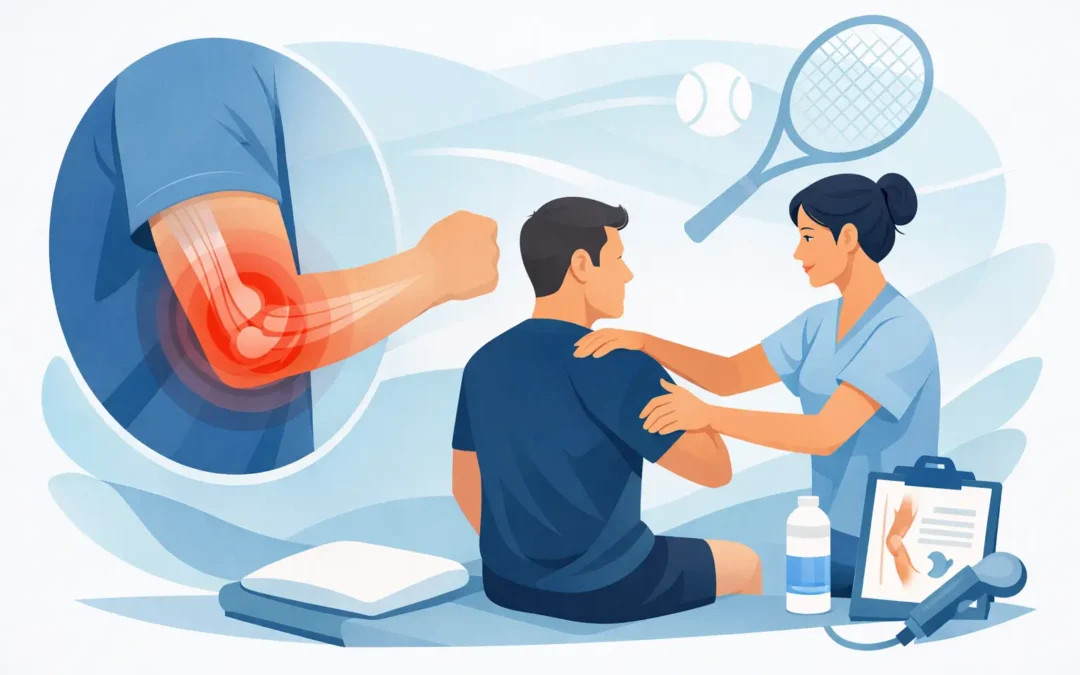
Shoulder pain has a way of getting into everything. Reaching for a seatbelt, lifting a child, swimming, pressing overhead at the gym, even finding a comfortable sleeping position can suddenly feel uncertain. A good guide to rotator cuff rehabilitation should do more than hand you a few band exercises – it should explain what is actually happening, what recovery tends to involve, and how to rebuild confidence as well as strength.
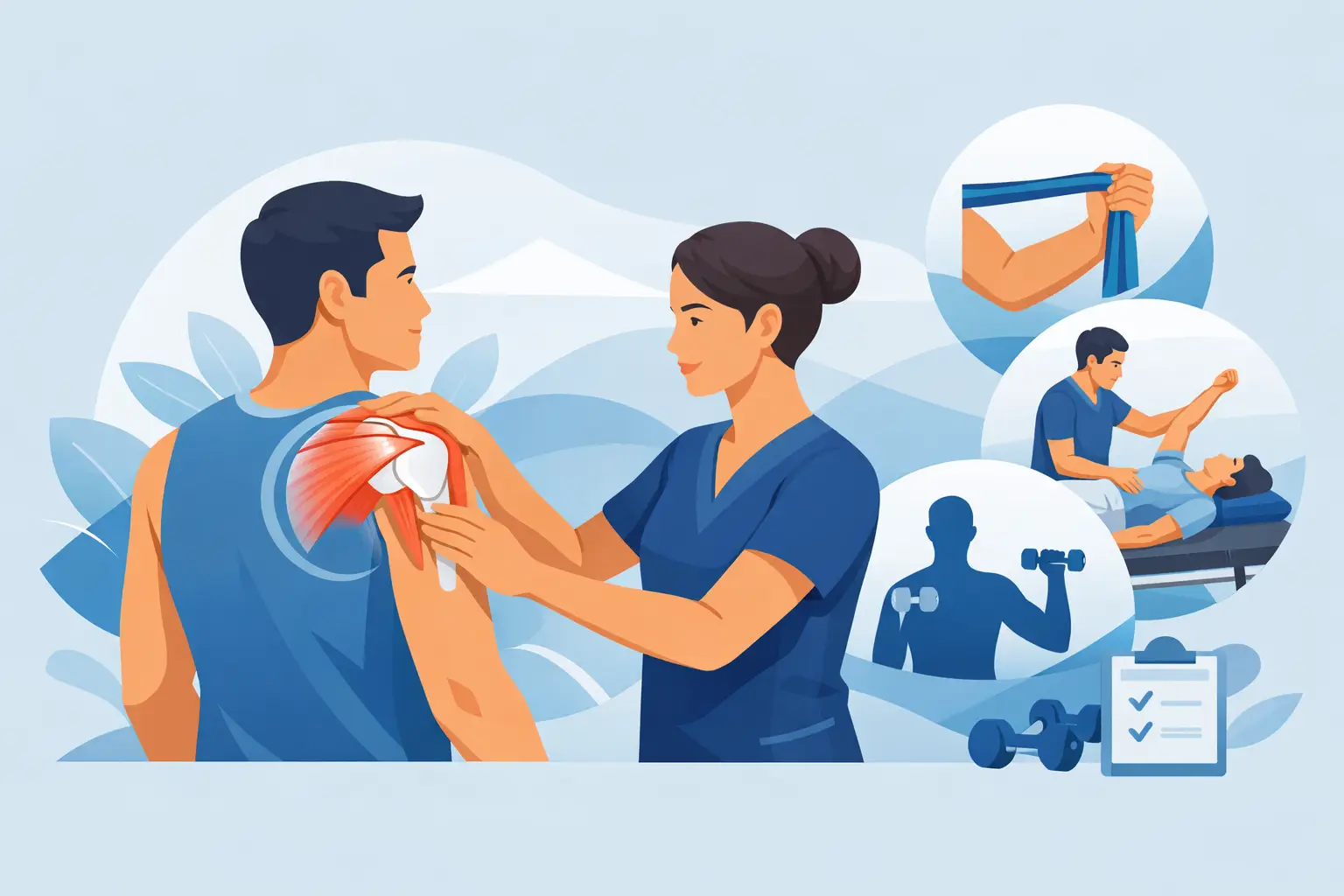
The rotator cuff is made up of four muscles and their tendons. Together, they help control and centre the ball of the shoulder in the socket while the larger muscles move the arm. When the cuff is irritated, strained, weak, overloaded or repaired surgically, the shoulder often becomes painful, stiff, reactive or simply unreliable. That does not automatically mean severe damage. In many cases, it means the shoulder needs a well-judged rehabilitation plan rather than rest alone.
What rotator cuff rehabilitation is really trying to do
A common misconception is that shoulder rehabilitation is about chasing pain away with passive treatment. Evidence from sports medicine and musculoskeletal physiotherapy points in a different direction. Good rehabilitation aims to restore load tolerance, movement control and function. In plain terms, that means helping the shoulder handle the demands of your life again.
For one person, that may mean returning to desk work without pain by the afternoon. For another, it may mean serving in tennis, doing pull-ups or getting back to manual work. This is why generic shoulder plans often fall short. Two people can both have rotator cuff-related pain and still need very different exercise doses, timelines and progressions.
Research published in journals such as the British Journal of Sports Medicine and the Journal of Orthopaedic & Sports Physical Therapy consistently supports exercise-based care as a central part of treatment for rotator cuff-related shoulder pain. Education also matters. People tend to do better when they understand that pain during rehabilitation is not always a sign of harm, and that gradual loading is often part of recovery rather than a threat to it.
A guide to rotator cuff rehabilitation after pain or injury
The first phase is usually about calming the shoulder without shutting life down completely. That balance matters. Complete rest can lead to deconditioning, loss of confidence and increased sensitivity, while doing too much too soon can keep symptoms flared. Early rehabilitation often includes modifying aggravating tasks, improving sleep positioning, and introducing tolerable exercises that maintain movement and begin to restore muscle activity.
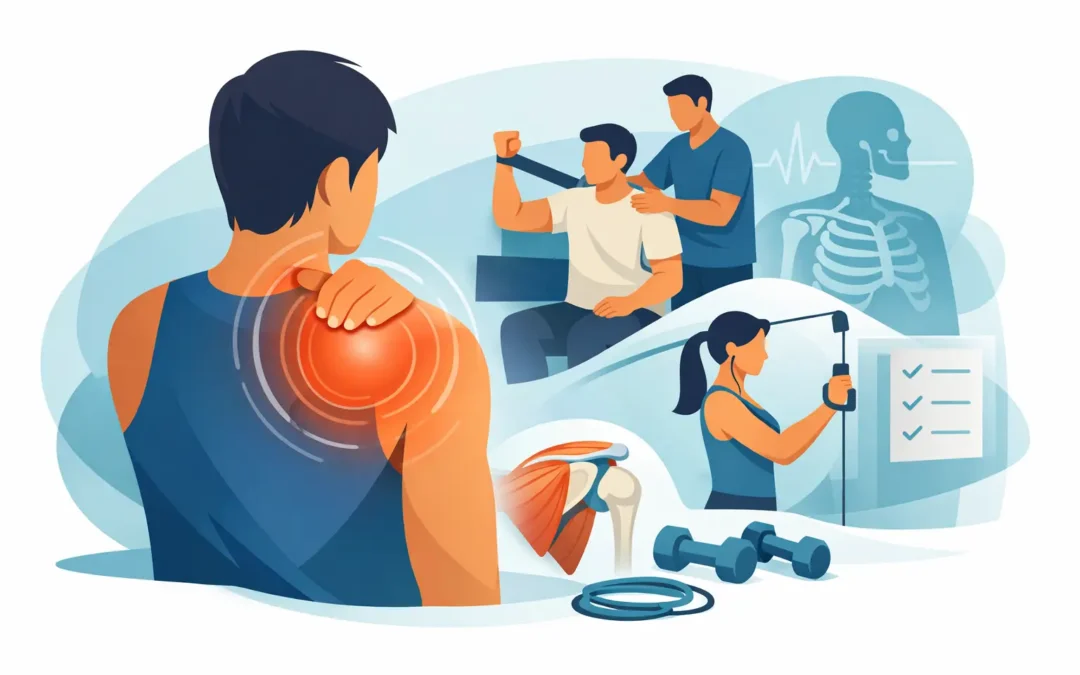
Isometric exercises can be useful here for some people. These are muscle contractions without obvious joint movement, such as gently pressing the hand into a wall. They are not magic, but they can offer a starting point when the shoulder is irritable. Light range of motion work, scapular control exercises and carefully chosen rotator cuff loading may also help maintain function while symptoms settle.
As pain becomes more manageable, the focus shifts towards progressive strengthening. This is the part many people need but often do not do for long enough. Tendons and muscles adapt over time, not in a weekend. External rotation work, abduction strength, rowing patterns, and exercises that challenge shoulder control in different positions are commonly used, but the exact prescription depends on the presentation.
There is also a difference between movement that is possible and movement that is ready for demand. You might be able to lift your arm overhead, but that does not mean your shoulder is yet prepared for repeated lifts, fast movements or sustained loads. Rehabilitation closes that gap.
What exercises are usually included
Most rotator cuff rehabilitation programmes include a blend of mobility, strength and function-specific work. Mobility matters if stiffness is limiting normal mechanics, but chasing more range in a painful shoulder is not always the first priority. In some cases, improving strength and confidence reduces pain and movement improves as a result.
Strength work often starts in supported or simple positions, then progresses. That may include side-lying external rotation, banded rotation, scaption, wall slides, rows, carries, and later, more demanding overhead or gym-based exercises. For athletes and active adults, rehabilitation should eventually resemble the tasks they want to return to. If you want to get back to paddling, climbing, badminton or weight training, the final phase should reflect those demands rather than stopping at light resistance bands.
The evidence does not support a single perfect exercise programme for everyone. What matters more is appropriate loading, progression and adherence. A technically flawless exercise performed twice and abandoned is less useful than a sensible plan you can follow consistently for eight to twelve weeks.
How much pain is acceptable during rehab?
This is where nuance matters. A zero-pain rule is often too strict and can slow progress unnecessarily. At the same time, severe or escalating pain after exercise is a sign that the current load may be too much. In clinical practice, many physiotherapists use a tolerable pain model, where mild to moderate discomfort during exercise can be acceptable if symptoms settle afterwards and do not cause a meaningful flare the next day.
That threshold varies from person to person. Someone with high irritability may need a gentler starting point. Someone with longstanding shoulder pain and marked weakness may need encouragement to load the area a little more than they expected. The aim is not to provoke pain for the sake of it. The aim is to load the shoulder enough to stimulate adaptation without overwhelming it.
Recovery timelines and what affects them
People naturally want a firm answer to the question, how long will this take? The honest answer is that it depends on the diagnosis, irritability, duration of symptoms, age, training history, sleep, work demands and whether there has been surgery.
For non-surgical rotator cuff-related shoulder pain, meaningful improvement often takes several weeks, with more substantial gains commonly seen over two to three months of structured rehabilitation. Some recover faster, especially if symptoms are recent and the shoulder has not lost much strength. Others take longer, particularly if the pain has been persistent for months or if there are several contributing factors such as neck involvement, poor load management or significant deconditioning.
After rotator cuff repair surgery, timelines are usually longer and more protective early on. The repaired tendon needs time, and loading has to match tissue healing as well as function. Post-operative rehabilitation is not simply delayed strengthening. It is a staged process with clear decisions around protection, range of motion, muscle activation, strength and return to activity. This is one reason individual guidance matters so much.
When rehabilitation needs rethinking
Not every shoulder follows a smooth path. If pain is worsening steadily, sleep is severely disrupted for weeks, there is notable weakness after a traumatic event, or you cannot lift the arm properly, assessment is important. The same applies if rehabilitation has plateaued because the original diagnosis was incomplete.
Rotator cuff pain can overlap with stiffness, biceps irritation, neck referral, instability, labral problems or postural and training issues that keep overloading the shoulder. Good physiotherapy is not about forcing the same programme harder. It is about checking whether the plan still fits the problem.
Why individualised rehab usually works better than generic advice
Online shoulder exercises are easy to find, but more exercise is not always better exercise. The dosage, tempo, range, frequency and progression all matter. So does your wider routine. A parent carrying a toddler daily, an office worker using a laptop for ten hours, and a recreational lifter returning to bench press all place different demands on the shoulder.
This is where evidence-based physiotherapy can be genuinely useful. A detailed assessment helps identify not just where it hurts, but why the shoulder is struggling and what needs to change. Sometimes the key issue is rotator cuff capacity. Sometimes it is thoracic mobility, training load errors, apprehension around movement, or trying to return to sport before control has caught up with strength.
At PhysioX, that process is built around one-to-one care, clear reasoning and practical progression rather than passive shortcuts. The goal is not simply to reduce pain in the clinic. It is to help you move well, understand your shoulder, and return to work, sport and everyday life with more confidence.
If your shoulder has been holding you back, recovery does not start with waiting for it to magically settle. It starts with the right plan, delivered at the right pace, and adjusted to your real life. Ready to take the next step in your recovery? Book a session with our team at PhysioX today.