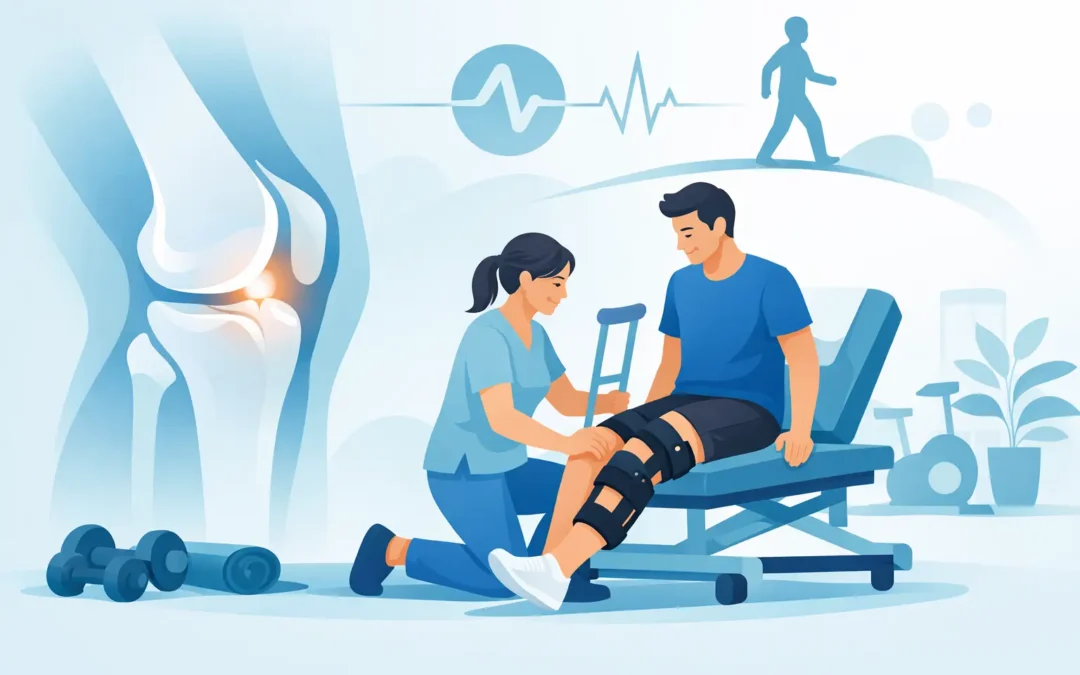
The first few days after knee surgery can feel deceptively simple. The stitches are small, the pain may be manageable, and many people assume the hard part is over. In reality, a good guide to meniscus surgery recovery starts here – not with rest alone, but with the right balance of protection, movement and progressive loading.
Meniscus surgery is not one single operation. Some people have a meniscectomy, where the damaged portion of the meniscus is trimmed. Others have a meniscus repair, where the surgeon stitches the tissue in the hope that it heals. That difference matters because recovery timelines, restrictions and rehabilitation goals are not the same. A trimmed meniscus often allows a quicker return to walking and activity, while a repaired meniscus usually needs a more cautious progression to protect healing tissue.
What should stay the same is the principle behind rehabilitation. Evidence from sports medicine and orthopaedic rehabilitation literature consistently supports early, appropriate movement, strength work and function-based progressions rather than passive treatment alone. Recovery is not about waiting for the knee to feel normal. It is about helping it become capable again.
What affects meniscus surgery recovery?
The biggest factor is the type of surgery. After a partial meniscectomy, patients often progress faster because there is no repair site that needs protection. After a meniscus repair, your surgeon may limit knee bending, weight-bearing or both for several weeks depending on the tear pattern and fixation method.
Your starting point also matters. Someone who was strong, active and had good knee movement before surgery often regains function faster than someone who had months of pain, swelling and reduced confidence before the operation. Age, cartilage health, other ligament injuries and the physical demands of your work or sport also influence the pace of recovery.
This is where individualised physiotherapy becomes valuable. Two people can have the same procedure and very different needs. One may need to regain the confidence to walk downstairs without guarding. Another may need to rebuild enough single-leg strength and control to return to football, tennis or running.
A guide to meniscus surgery recovery by phase
Phase 1: Calm the knee and restore basic movement
The early phase is usually about settling pain and swelling, regaining knee extension, and reintroducing walking. Full straightening of the knee is especially important. If extension remains limited, gait often becomes altered, the quadriceps struggle to activate well, and the knee can remain irritable for longer.
Swelling is not just a side issue. Even a modest effusion can inhibit quadriceps function, which is one reason the knee may feel weak or unstable after surgery. Simple early exercises often include quadriceps setting, straight leg raises if appropriate, ankle pumps and gentle range of motion work. Walking is introduced according to the surgeon’s protocol, especially if a repair has been done.
This phase is also where many myths need correcting. Good rehabilitation is not built around machines, massage or passive treatments alone. Hands-on care can be helpful in selected cases, but it does not replace the work of regaining movement, strength and confidence.
Phase 2: Rebuild strength and normal movement patterns
Once pain and swelling are settling and walking is improving, the focus shifts to strength and control. This usually includes the quadriceps, hamstrings, calf, glutes and trunk. Research in knee rehabilitation repeatedly shows that muscle strength, particularly quadriceps strength, is closely tied to better function.
Exercises might progress from sit-to-stand patterns and supported squats to step-ups, split squats and balance work. The exact menu depends on the surgery and the person in front of you. After meniscus repair, deeper knee flexion and higher loads may be delayed. After meniscectomy, progression is often quicker, but that does not mean rushed.
At this stage, quality matters as much as quantity. If the knee collapses inward, the trunk shifts excessively, or pain climbs significantly after every session, the programme needs adjusting. More exercise is not always better. Better-targeted exercise is better.
Phase 3: Return to higher function
For active adults and athletes, the later phase is about preparing the knee for real life demands. That may mean getting back to gym training, climbing stairs repeatedly at work, carrying children, jogging, changing direction or returning to sport.
This is where rehabilitation should become more specific. A recreational runner needs different preparation from someone who plays basketball. A desk-based professional may need help tolerating long commutes and returning to exercise after months of inactivity. A field-sport athlete will need impact tolerance, deceleration control and confidence under speed.
Evidence-based return-to-sport rehabilitation tends to favour criteria rather than dates alone. Time since surgery matters, but it should not be the only marker. Strength symmetry, movement quality, swelling response, hop performance where appropriate, and confidence all help guide decision-making.
Common timelines, with an important caveat
People understandably want a calendar. The challenge is that meniscus recovery does not behave like a train timetable.
After a partial meniscectomy, some people walk fairly comfortably within days and return to office-based work in one to two weeks. Strength and impact activities still take longer, and sport may require several weeks or more depending on symptoms and baseline conditioning.
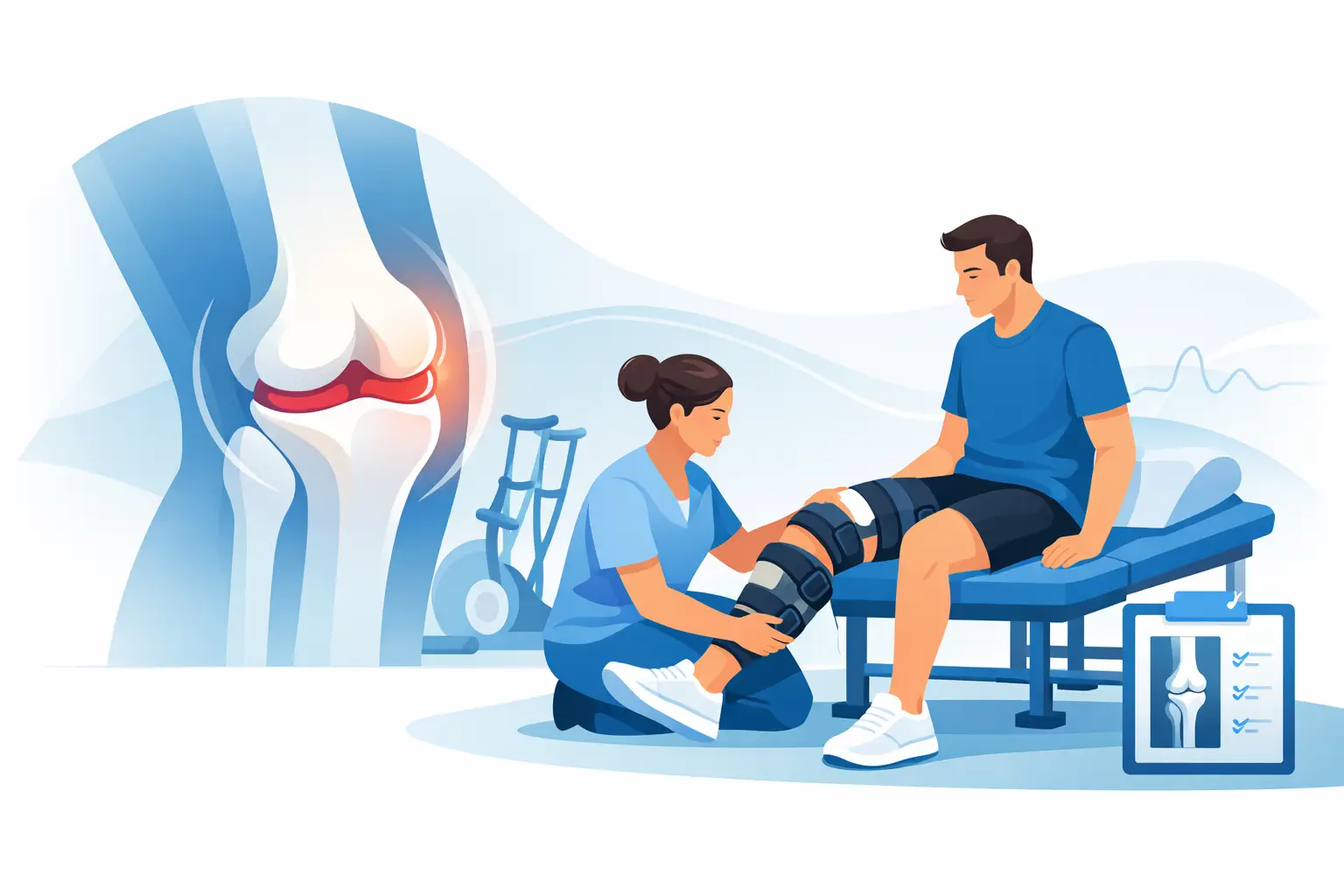
After a meniscus repair, recovery is usually slower. Protected weight-bearing or bracing may be used early on, and return to running or pivoting sport can take months rather than weeks. Many protocols are cautious because the goal is not simply to feel better, but to give the repaired tissue the best chance of healing.
So yes, timelines matter, but symptoms, function and surgical guidance matter more.
What patients often get wrong
One common mistake is doing too little because they fear damaging the knee. The other is doing too much because the pain is low and motivation is high. Both can slow progress.
Another mistake is judging recovery only by pain. A knee can be relatively comfortable yet still lack strength, control and load tolerance. This is why some people feel fine in daily life but flare up quickly when they try to run, squat deeply or return to sport.
Then there is the issue of stopping rehab too early. Once limping settles and stairs become easier, it is tempting to think the knee is done. In practice, this is often the point where the more meaningful rebuilding should begin.
Red flags and reasons to ask for help
Some discomfort, stiffness and swelling are expected after surgery. What is less reassuring is pain that worsens steadily, marked calf swelling, fever, significant redness around the wound, or inability to regain movement over time. These should be discussed promptly with your surgeon or healthcare team.
There are also less urgent but still important signs that you may need a more structured rehabilitation plan. If your knee keeps swelling after basic activity, if you still cannot trust it on stairs, or if you have returned to exercise but not to your previous level, the issue may be less about healing and more about incomplete rehabilitation.
Where physiotherapy makes the difference
The best post-operative physiotherapy is not generic. It should account for your surgical procedure, current symptoms, movement quality, strength deficits, sport or work goals, and the barriers that matter in your life.
That may include helping an office worker in Singapore manage swelling during long days on their feet and commutes, or guiding an active adult back to strength training without overloading the joint too soon. The point is not simply to hand out exercises. It is to assess, progress and course-correct with precision.
At PhysioX, that means treating recovery as a partnership. We guide the process, but you remain an active participant in it. That is how confidence returns – not through guesswork, but through a clear plan, measured progress and honest education about what your knee needs next.
Recovery after meniscus surgery is rarely linear, and that is not a sign of failure. A stiff morning, a swollen day after doing more steps, or a week that feels slower than expected can all be part of the process. What matters is having a rehabilitation approach that looks beyond symptom suppression and builds a knee that is genuinely ready for life, work and sport again.
Ready to take the next step in your recovery? Book a session with our team at PhysioX today.