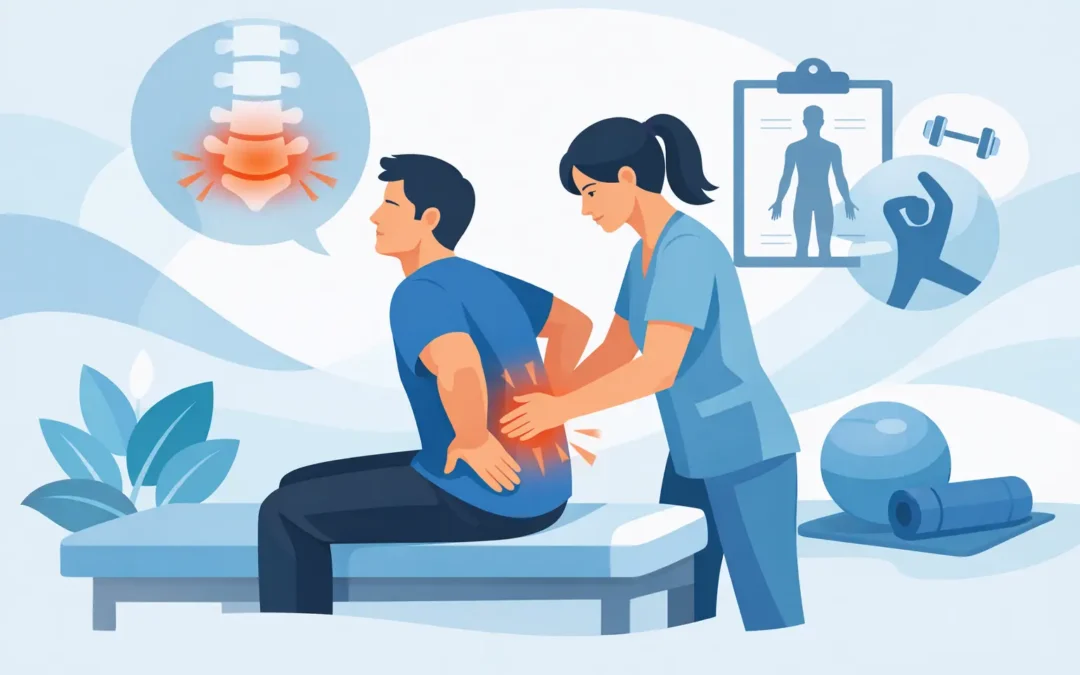
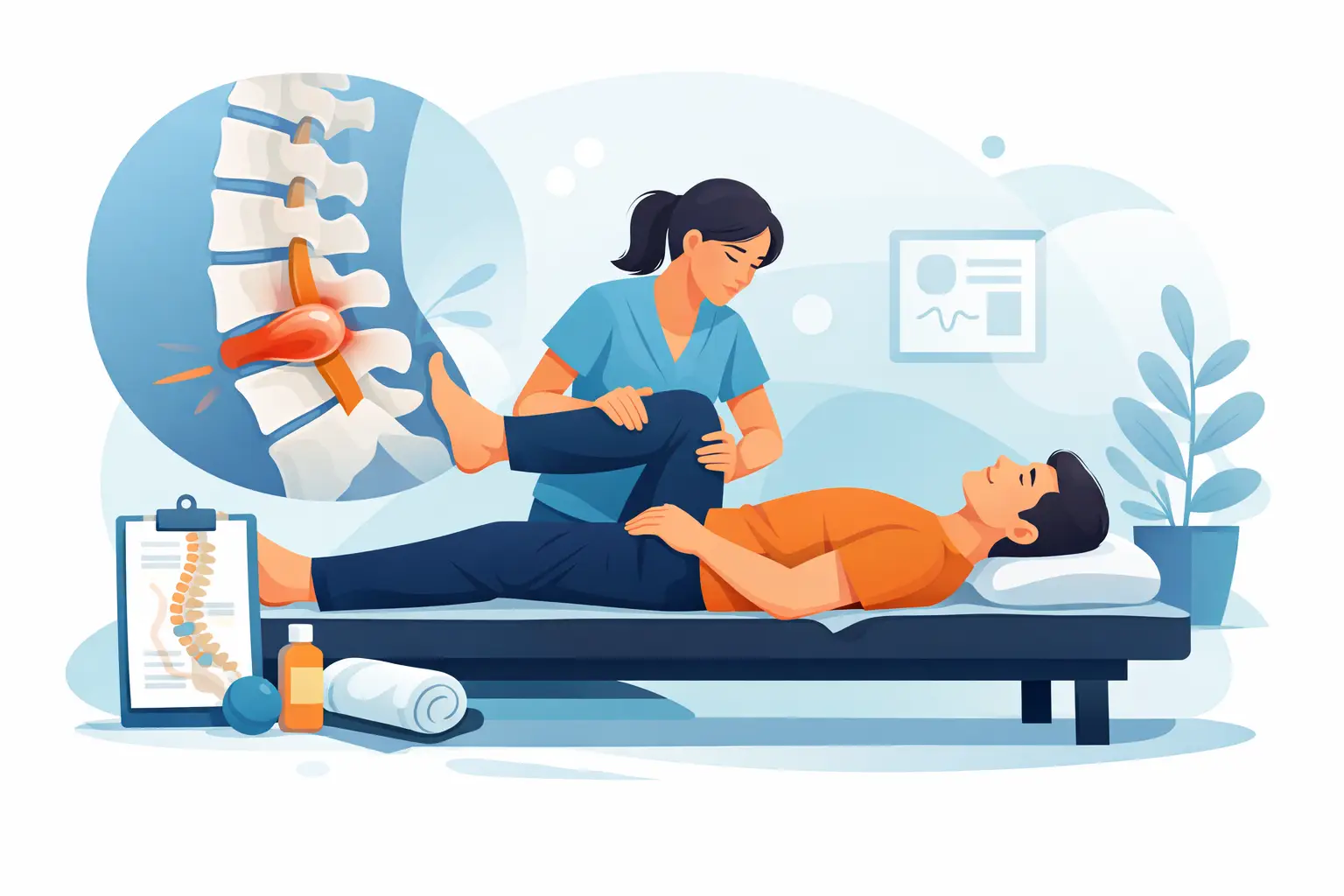
That sharp pain down the leg, the sudden difficulty standing upright, the fear of bending to pick something up – a slipped disc can make ordinary movement feel risky. If you are wondering can physiotherapy help slipped disc symptoms, the short answer is yes, in many cases it can. The better answer is that physiotherapy can help when it is based on a clear assessment, an accurate understanding of your symptoms, and a rehabilitation plan that matches how your body is actually responding.
The term slipped disc is common, but it is not especially precise. Discs do not usually “slip” out of place. More often, the issue involves a disc bulge or herniation, where disc material presses on nearby structures or contributes to inflammation and nerve irritation. This is why some people feel pain mainly in the back, while others get leg pain, pins and needles, numbness, or weakness.
Can physiotherapy help slipped disc cases?
For many people, yes. Research and clinical guidelines consistently support conservative care as a first-line approach for most lumbar disc problems, especially when serious neurological compromise is not present. Evidence from journals such as the British Journal of Sports Medicine and the Journal of Orthopaedic & Sports Physical Therapy supports active rehabilitation, patient education, and progressive exercise as key parts of recovery from low back pain and related disc symptoms.
That said, physiotherapy is not magic and it is not passive. Good physiotherapy does not simply mean a few stretches, a massage, or a machine. It means working out what is driving your pain, what movements are currently sensitive, what activities matter to you, and how to improve your capacity step by step. The aim is not only to reduce symptoms, but to help you return to work, gym training, sport, parenting, travel, and daily life with more confidence.
Why symptoms vary so much
A slipped disc is not one fixed experience. One person may have severe pain for two weeks and recover steadily. Another may have milder but persistent symptoms over months. Some people have a disc bulge on imaging with very little pain, while others have strong symptoms with less dramatic scan findings.
This is where careful assessment matters. Pain is influenced by tissue irritation, nerve sensitivity, movement tolerance, sleep, stress, fear of movement, and previous episodes. In other words, the scan does not tell the whole story. Evidence-based physiotherapy takes this wider picture seriously because treatment should respond to the person, not just the image.
When physiotherapy is usually appropriate
Physiotherapy is often suitable when pain is mechanical in nature, symptoms change with movement or posture, and there is no urgent medical red flag. Many disc-related problems improve over time, and rehab helps guide that recovery rather than leaving it to chance.
A physiotherapist may help you manage acute pain, find positions or movements that calm symptoms, restore spinal and hip mobility where useful, rebuild trunk and lower-limb strength, and plan a gradual return to activity. This matters because avoiding movement for too long often leads to deconditioning, stiffness, and more uncertainty about what the body can handle.
When you need urgent medical review
There are situations where physiotherapy should not be the only step. If you have progressive weakness, loss of bladder or bowel control, numbness around the saddle area, unexplained weight loss, fever, major trauma, or severe unrelenting night pain, you need urgent medical assessment. A responsible physiotherapist will screen for these signs and refer appropriately.
What evidence-based physiotherapy actually involves
The most effective treatment plan depends on your symptoms, irritability, goals, and stage of recovery. There is no single exercise that fixes every slipped disc, and that is exactly why generic online advice often falls short.
1. A detailed assessment
A proper assessment looks at more than where it hurts. It should explore how your symptoms started, whether pain travels, what movements worsen or ease it, whether there are neurological signs, how sleep and sitting are affected, and what function you need to get back to. For an office worker in Singapore, that may mean tolerating prolonged sitting and commuting. For a recreational runner, it may mean returning to impact and speed work safely.
2. Education that reduces fear
Many people with a slipped disc become afraid that bending, lifting, or exercise will make things worse. Sometimes temporary modification is sensible. But long-term fear can become one of the biggest barriers to recovery.
Current pain science and musculoskeletal rehabilitation principles emphasise clear education. Patients do better when they understand what is happening, what is safe, and why movement is part of treatment. This helps replace guesswork with a plan.
3. Symptom-guided movement and exercise
Exercise is usually central, but it should be targeted rather than random. In the early phase, this may involve repeated movements, walking, gentle mobility work, or positions that reduce leg symptoms. For others, especially when symptoms are settling, the focus shifts towards strength, control, endurance, and tolerance to daily tasks.
Research in low back pain and disc-related presentations supports active approaches over prolonged rest. The exact exercises may vary, but the principle is consistent: graded loading helps tissues and the nervous system adapt.
4. Return-to-function planning
This is the part many people miss. Pain relief is useful, but it is not the final destination. If your goal is to carry your child, sit through a workday, deadlift again, or get back on the tennis court, rehab should prepare you for that.
That means progressive loading, exposure to previously painful tasks, and realistic timeframes. It also means accepting that recovery is rarely perfectly linear. A flare-up does not always mean damage. Sometimes it means the dose needs adjusting.
Can physiotherapy help slipped disc pain without surgery?
In many cases, yes. Most people with lumbar disc herniation do not require surgery, and many improve with conservative care over time. Studies have shown that symptoms can settle significantly with non-surgical management, particularly when rehabilitation is active and well monitored.
Surgery can be appropriate in selected cases, especially when there is significant neurological deficit, severe persistent sciatica not improving with time, or red-flag symptoms. Physiotherapy is still important either way. If surgery is not needed, rehab can help you recover. If surgery is needed, physiotherapy often helps before and after the procedure to restore movement, strength, and confidence.
This is where honest clinical reasoning matters. Ethical care means not pushing treatment that is unnecessary, but also not waiting too long when further medical input is needed.
What tends to slow recovery
A few patterns commonly get in the way. One is complete rest for too long. Another is jumping back into full activity the moment symptoms ease, without rebuilding capacity. A third is chasing only passive treatment.
Hands-on treatment can have a role for short-term symptom relief in some cases, but it should support active rehab rather than replace it. If treatment makes you feel better for a few hours but you still cannot bend, sit, walk, lift, or exercise with confidence, the plan is incomplete.
Sleep disruption, high stress, low activity levels, and repeated cycles of flare-up and avoidance can also prolong symptoms. This is why a good physiotherapy programme looks at the full picture rather than treating the disc as an isolated structure.
What recovery often looks like
Most people want a simple timeline, but recovery depends on symptom severity, nerve involvement, general health, activity demands, and how long the issue has been present. Some improve noticeably within a few weeks. Others need longer, especially if symptoms have become persistent or if strength deficits have developed.
A realistic marker of progress is not just lower pain. It is improved walking tolerance, better sleep, less leg pain, increased confidence bending, better sitting tolerance, and the ability to return to meaningful tasks. These changes matter because they reflect real function, not just a score on a pain scale.
The goal is not to wrap you in cotton wool. It is to help you become more capable, more informed, and less limited by your back.
If your symptoms suggest a slipped disc, it is worth getting assessed properly rather than relying on guesswork or waiting for it to become a bigger problem. The right plan can make the path ahead much clearer. Ready to take the next step in your recovery? Book a session with our team at PhysioX today.
Recovery from a slipped disc is rarely about finding one perfect treatment. More often, it is about understanding your symptoms, loading the body wisely, and building trust in movement again – one well-judged step at a time.