
Ankle sprains in Singapore are one of the most common injuries experienced by both athletes and non-athletes.
Some of the commonly asked questions include:
- What exactly did I injure around my ankle?
- Do I need to seek help for this?
So let’s step right into answering some of these questions!
What happens during an ankle sprain?
There are three main types of ankle sprains:
- Inversion ankle sprain (foot turns inwards)
- Eversion ankle sprain (foot turns outwards)
- High ankle sprain (rotation of the shin bone)
When you sprain your ankle, one or more ligaments around the ankle may be injured to varying degrees.

Ankle inversion sprain
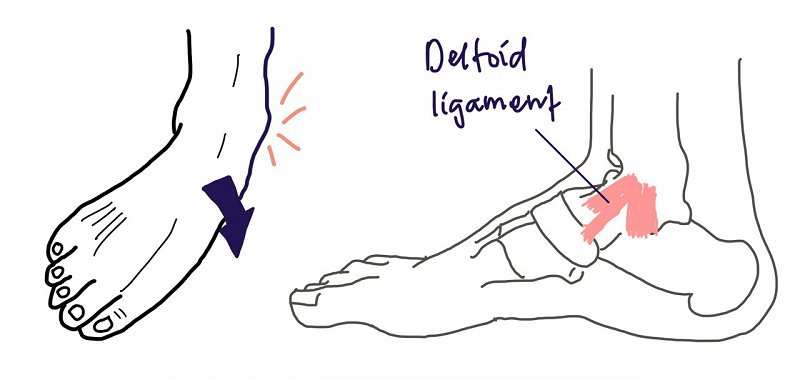
Ankle eversion sprain
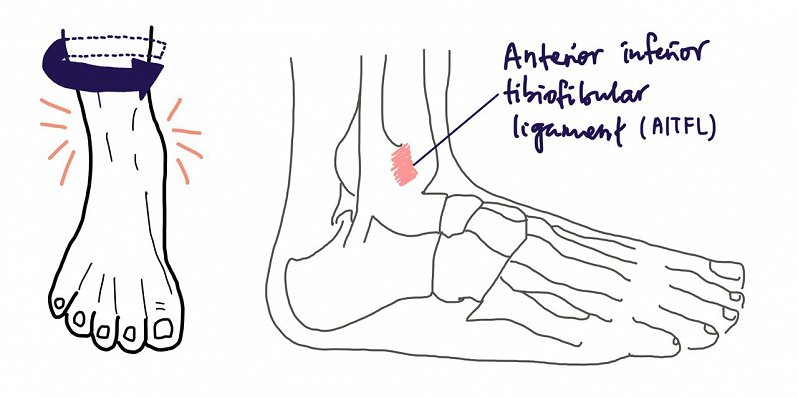
High ankle sprain
Physiotherapy for an ankle sprain?
Doesn’t the saying: “once you’ve sprained your ankle before, it’s very easy to sprain it again” sound familiar? Ever wondered why this is the case?
A high proportion of people with previous ankle sprains go on to experience Chronic Ankle Instability (CAI). This is a condition where symptoms such as ankle pain and/or instability persist for more than 12 months. It may manifest in the form of repeated ankle sprains and possibly affecting one’s ability to engage in sporting or recreational activities.
Hence, a thorough assessment by a Physiotherapist is essential. Physiotherapists at PhysioX will assess the strength, mobility and balance deficits after an ankle sprain, all of which can contribute to the development of CAI.
Most ankle sprains can be managed without surgery, although in some situations, your doctor may recommend you to undergo a ligament reconstruction surgery. Either way, Physiotherapy plays a crucial role in ensuring a good recovery. You can expect your Physiotherapist to assist you in symptom management, teach you how to progressively put weight through your ankle and guide you in regaining your mobility, balance and strength. Exercises for ankle sprains vary and are chosen specifically for each patient’s context and ability.
Examples of exercises for your ankle sprain:

Calf stretch

Forward lunges

Single leg balance on foam
Can I return to running or sport?
Of course you may get back to your chosen activities! During your rehabilitation, your Physiotherapist will practice sport specific drills to help you gain confidence in your ankle.
And once it is safe to do so, your Physiotherapist will run a battery of tests, guided by the PAASS framework (as shown below) to determine if you are ready for return to sport.
What to do after an ankle sprain?
At PhysioX, we believe in keeping abreast with the latest best practice guidelines to ensure that we provide you with the best care. So, let us share some of the most updated recommendations after an ankle sprain!
Move as able, after an ankle sprain
Firstly, we recommend mobilising your ankle early and progressively putting weight on it rather than complete rest, as it has shown to have a more favourable outcome. But of course, this should be done in a safe and controlled manner.
Reconsider icing after an ankle sprain
Should you ice after ankle sprain? It may be almost instinctive to grab an ice pack when you’ve suffered an injury, but does it even help? Recent literature has pointed out that there is no actual effect of icing on functional outcomes. Additionally, ice slows down the healing process as it limits your body’s natural inflammation process. In short, while ice could offer some pain relief, it could also be counterproductive in less severe injuries!
Last quick tip!
The use of braces and tape have proven to be highly effective for protection immediately after an injury as well as prevention of repeat ankle sprains when returning to sport. Hence, your Physiotherapist will advise you on the type of brace or tape to use if they are appropriate for you.
Whether you have recently sprained your ankle or are experiencing chronic symptoms, come and see a Physiotherapist to find out more and get guidance on your journey towards a safe return to activity!
Book now or give us a call to schedule an appointment to see our Physiotherapist who will be able to partner you to recovery as we address your ankle pain and hopefully to prevent any future ankle sprains!
DISCLAIMER: These advice and exercises should not replace the need for a consultation with a Physiotherapist especially if your condition doesn’t improve. Therapeutic exercise should be carefully selected to suit your condition.
Ref:
Ankle Sprains: What Updated Guidelines Mean for You. (2021). The Journal of Orthopaedic and Sports Physical Therapy, 51(4), 161–161. https://doi.org/10.2519/jospt.2021.0504
Collins, N. C. (2008). Is ice right? Does cryotherapy improve outcome for acute soft tissue injury?. Emergency Medicine Journal, 25(2), 65-68.
Martin, R. L., Davenport, T. E., Fraser, J. J., Sawdon-Bea, J., Carcia, C. R., Carroll, L. A., … & Carreira, D. (2021). Ankle Stability and Movement Coordination Impairments: Lateral Ankle Ligament Sprains Revision 2021: Clinical Practice Guidelines Linked to the International Classification of Functioning, Disability and Health From the Academy of Orthopaedic Physical Therapy of the American Physical Therapy Association. Journal of Orthopaedic & Sports Physical Therapy, 51(4), CPG1-CPG80.
Smith, M. D., Vicenzino, B., Bahr, R., Bandholm, T., Cooke, R., Mendonça, L. D. M., … & Delahunt, E. (2021). Return to sport decisions after an acute lateral ankle sprain injury: introducing the PAASS framework—an international multidisciplinary consensus. British Journal of Sports Medicine.
Filed under: Ankle