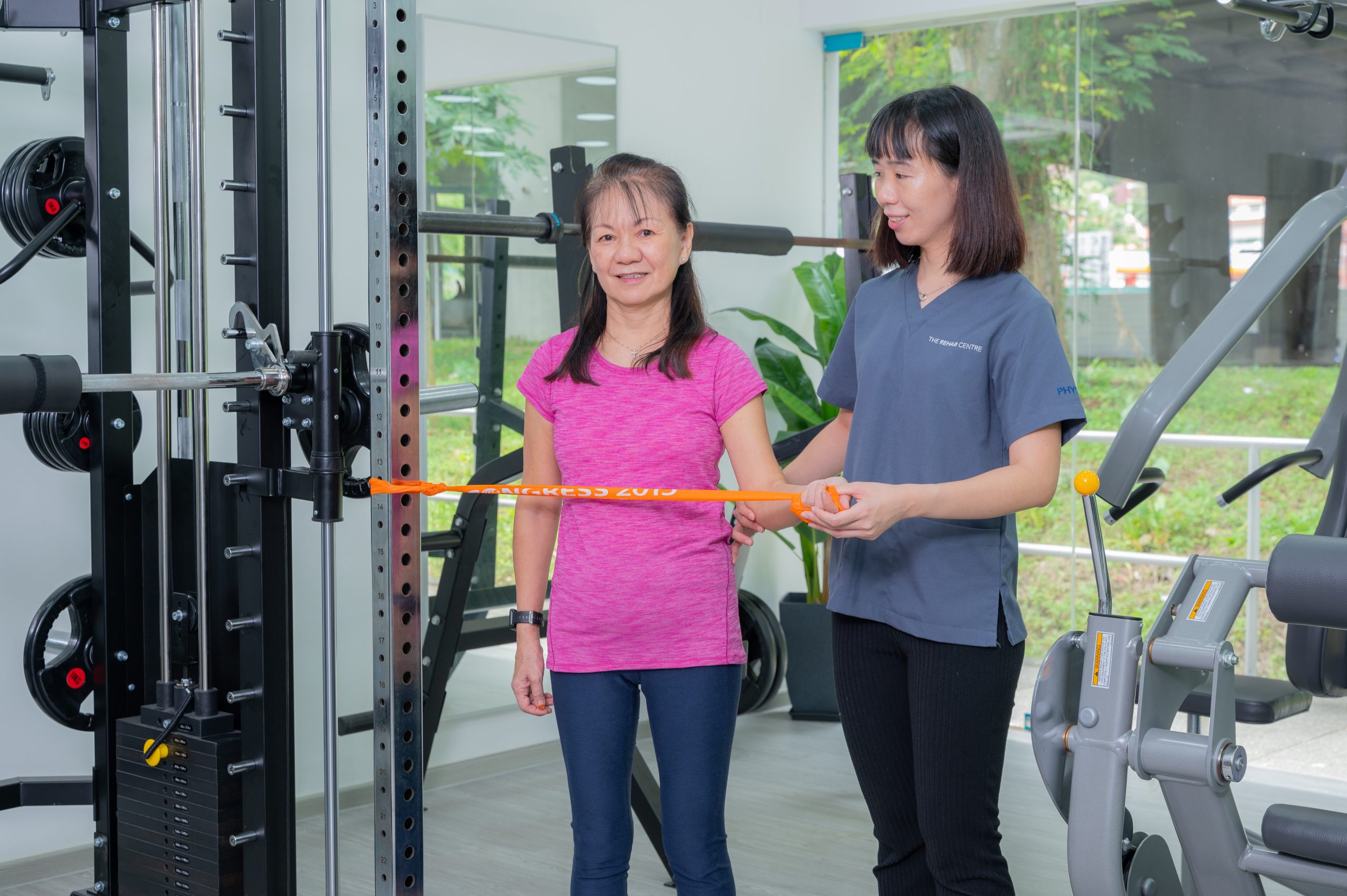
Rotator cuff repair rehabilitation is complex and critical in helping patients regain shoulder function. Understanding optimal physiotherapy visit frequency rotator cuff can guide Physiotherapists in Singapore to provide effective yet cost-efficient care. This blog summarises recent findings on how often patients should attend supervised Physiotherapy sessions after arthroscopic rotator cuff repair (ARCR).
A study compared high-frequency (HF) visits—twice weekly for 12 weeks—with low-frequency (LF) visits—once every two weeks initially, then weekly—following the same exercise protocol. Importantly, the observed outcomes for pain, shoulder range of motion, and function were similar between both groups at all long-term checkpoints, including one year post-surgery.
Despite slightly higher activity-related pain in the LF group at eight weeks, this difference was not clinically significant and disappeared in later assessments. Both HF and LF groups showed progressive improvements in pain at rest, night pain, shoulder mobility, and American Shoulder and Elbow Surgeons (ASES) functional scores. This evidence suggests that fewer supervised sessions may suffice when combined with an effective home exercise programme.
Evidence from this research is particularly relevant considering healthcare resource constraints and patient affordability concerns in Singapore. Physiotherapists can adopt LF visit schedules initially, with more frequent visits focused between the 6th and 12th weeks when active strengthening begins and the risk of re-injury is higher. This approach may reduce rehabilitation costs while maintaining excellent clinical outcomes.
The study also reinforces that no one-size-fits-all protocol exists. Factors such as tear size, patient compliance, and complications necessitate tailored visit schedules. Physiotherapists must balance supervision and independent exercise, emphasising patient education and adherence.
In conclusion, Physiotherapists in Singapore should consider low-frequency visits in early rehabilitation after rotator cuff repair. This strategy can maintain recovery quality and reduce healthcare costs, aligning with patient-centred care principles.
Take Home Message
Low-frequency physiotherapy visit frequency rotator cuff, combined with home exercises, achieves comparable long-term outcomes to high-frequency visits.
Summary
This study highlights the value of low-frequency physiotherapy visit rotator cuff protocols in delivering effective rehabilitation after arthroscopic repair. Physiotherapists can safely adopt less frequent supervised visits without compromising patient recovery, especially when combined with a structured home exercise programme. It encourages efficient treatment planning to optimise outcomes and reduce costs, which is crucial for healthcare systems in Singapore.
References
Demirci, S., Kara, D., Yıldız, T. İ., Eraslan, L., Uysal, Ö., Sevinç, C., Ulusoy, B., Gazeloğlu, A. O., Turgut, E., Huri, G., Turhan, E., & Düzgün, İ. (2023). Effects of Different Frequencies of Physical Therapy Visits on Shoulder Function After Arthroscopic Rotator Cuff Repair. Physical Therapy, 103(10), 1–8. https://doi.org/10.1093/ptj/pzad066