
Key Points
- Progressive quadriceps strengthening is vital after total knee arthroplasty (TKA) for regaining strength and improving function during recovery.
- Muscle weakness, especially of the quadriceps, is the primary factor limiting patients’ ability to regain mobility and perform daily activities after TKA.
- Commonly used clinical measures like knee range of motion (ROM) and patient-reported outcomes (PROs) do not fully capture recovery progress or physical function after surgery.
- Performance-based functional tests assessing strength and movement abilities provide a more complete picture of recovery than ROM or symptoms alone.
- Early and continued supervised progressive rehabilitation focusing on strength gains improves function without compromising knee flexibility.
Clinical Implication:
Physiotherapists must prioritise early, progressive strengthening of the quadriceps muscle after TKA and use functional assessments alongside pain and ROM monitoring to guide rehabilitation and optimise recovery outcomes.
Study Limitation:
Many studies dismissing the benefits of physical therapy rely solely on ROM and PROs, neglecting strength and functional tests; thus, their conclusions underestimate the value of targeted rehabilitation.
Patient Implication:
Patients should be aware that exercise programmes focusing on regaining muscle strength, particularly of the front thigh muscles, are crucial to improving mobility and independence after knee replacement, beyond just achieving good joint movement or reduced pain.
Understanding Recovery After Total Knee Replacement
More people in Singapore are undergoing total knee arthroplasty (TKA), commonly called knee replacement surgery, to relieve severe arthritis pain and restore mobility, especially among older adults. However, many patients find that even after pain has reduced and the knee can bend and straighten, daily activities like walking, climbing stairs, or gardening remain challenging for months.
This discrepancy arises because traditional clinical measures often focus on the knee’s range of motion (how far it can bend and straighten) and on how patients report feeling in questionnaires. While important, these do not detect the critical weakness in the quadriceps muscle — the large muscle at the front of the thigh responsible for straightening the knee and stabilising it during movement. This muscle weakness limits function and delays full recovery.
Why Quadriceps Strength Matters Most in TKA Recovery
After TKA, the quadriceps muscle loses strength rapidly — studies show a fall of about 50% within the first month after surgery. This weakness affects the affected leg and even the other, non-operated leg to some degree.
Research highlights that quadriceps strength before surgery predicts how well a patient will be able to perform functional tasks like climbing stairs and walking one or two years after surgery. Early postoperative quadriceps strength is also a strong predictor of later recovery.
Simply put, regaining quadriceps strength is a rate-limiting step — the main hurdle — in recovering function following knee replacement.
Progressive Quadriceps Strengthening: The Cornerstone of Rehabilitation
“Progressive” means gradually increasing the difficulty or intensity of exercises over time, safely stretching the muscle’s capacity.
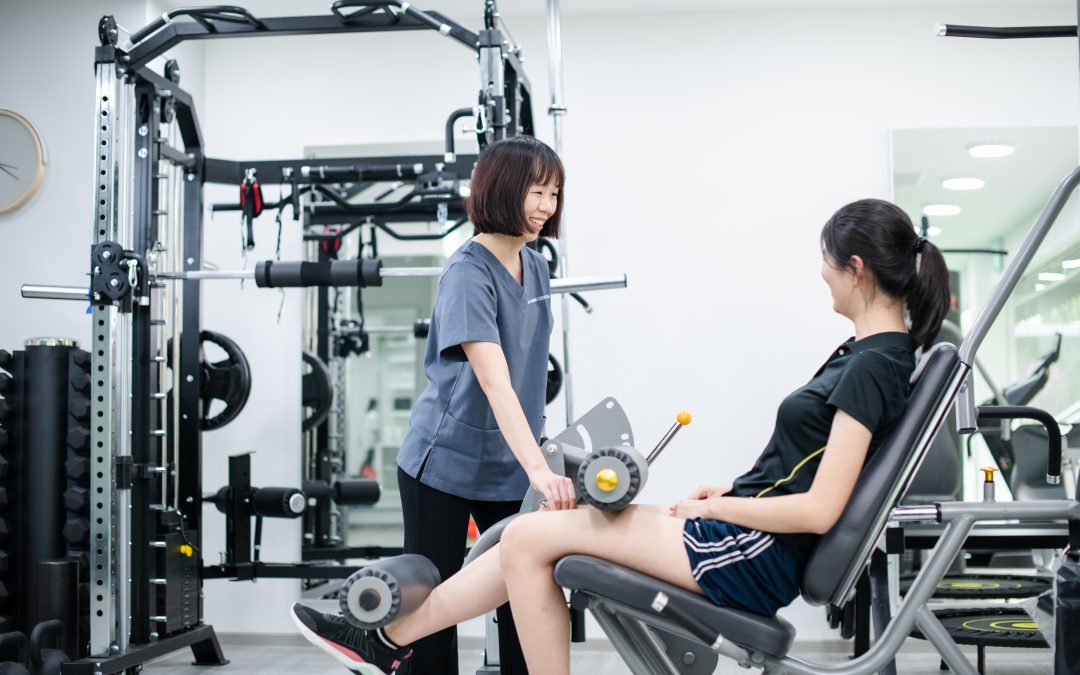
Postoperative rehabilitation programmes that include progressive resistance training focused on quadriceps strengthening have been shown to:
- Improve knee strength more than conventional Physiotherapy.
- Enhance functional tests like walking speed, stair climbing, and timed tasks.
- Not cause unwanted stiffness or reduce the range of knee movement.
Importantly, patients receiving these updated rehabilitation programmes often achieve muscle strength and function closer to healthy individuals their age, with fewer physiotherapy visits than traditional treatments.
What Does Progressive Rehabilitation Look Like?
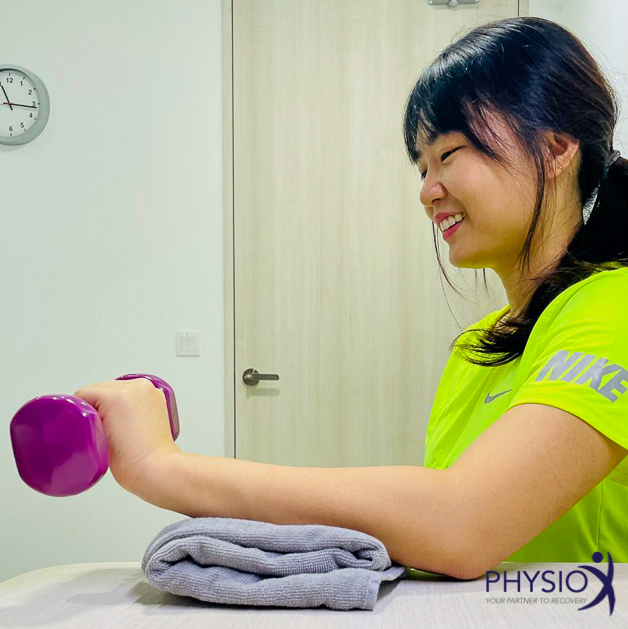
Physiotherapists design multi-faceted, personalised plans that include:
- Managing swelling and pain with ice, elevation, or other modalities to keep inflammation at bay.
- Stretching and joint mobilisation exercises to maintain or improve knee flexibility.
- Targeted strength exercises focusing on quadriceps but also hamstrings, calves, and hips to support balanced knee function.
- Use of neuromuscular electrical stimulation (NMES) in some programs to help activate weakened muscles.
- Incorporation of balance and neuromuscular control exercises to improve stability and prevent falls.
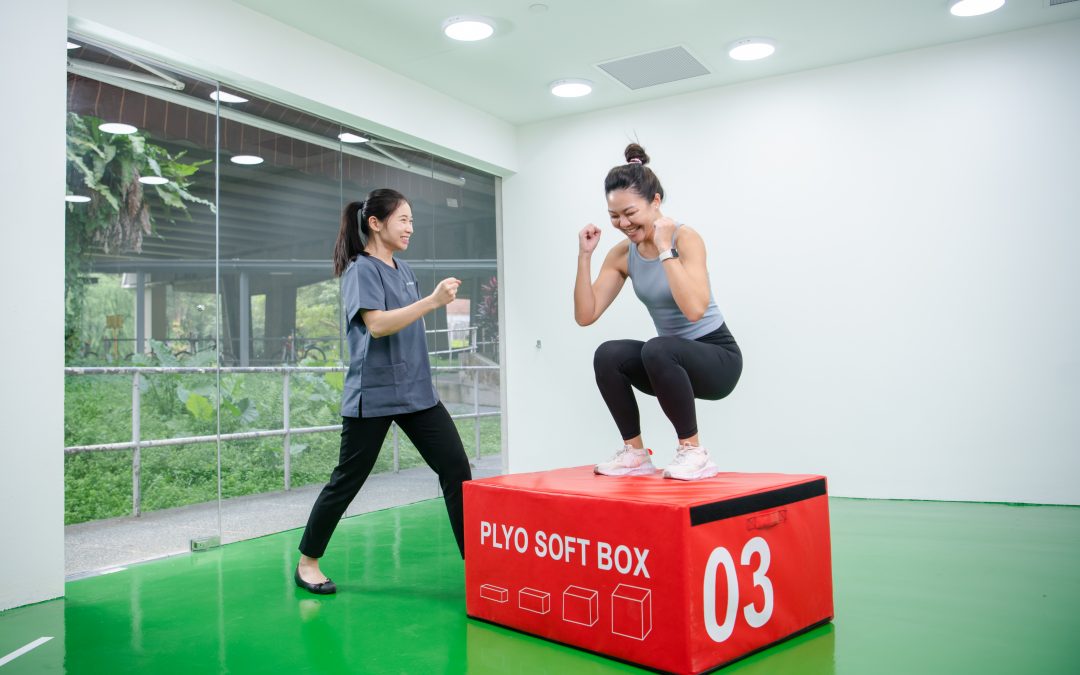
- Gradual progression to functional activities like walking, stair navigation, and chair rises.
- Supporting patients with a home exercise programme to maintain consistent exercise between clinic visits.
This approach is not simply rote repetition but includes tuning exercise intensity and volume according to each patient’s tolerance and milestones.
Why Range of Motion and Patient Questionnaires Are Not Enough
Clinicians have traditionally judged success with TKA by how far the knee bends and straightens (range of motion, ROM), along with patients’ reports of pain and function.
However, studies find that:
- Knee ROM beyond 110 degrees bending suffices for most daily activities in typical Western lifestyles.
- Even when ROM is fully restored, many patients still have difficulty walking or climbing stairs due to muscle weakness.
- Patients often report feeling improvements or satisfaction despite having poor function on objective tests.
- Patient-reported outcomes (PROs) largely reflect pain levels and perceptions, which do not always align with actual functional ability.
Therefore, relying only on ROM and PROs misses important impairments.
The Importance of Performance-Based Functional Tests
Functional tests, such as:
- Timed Up and Go (TUG)
- Stair climb test
- 30-second sit-to-stand
- Six-minute walk test
measure how well a patient performs specific tasks reflecting everyday function. These tests require no expensive equipment, take little time, and add valuable insight into recovery.
Research shows early performance on these tests strongly predicts recovery status at 6 months and beyond. They are better predictors than range of motion alone.
Addressing Doubts: Do Patients Always Need Supervised Physiotherapy?
Some recent studies suggest supervised physiotherapy after TKA may not be essential. However, critical review shows these studies only measured pain or range of motion and/or used patient questionnaires — not muscle strength or functional tests.
This omission can lead to underestimating the true benefits of supervised and progressive physiotherapy, which:
- Targets strength gains
- Enhances functional capacity
- Monitors and tailors progression
- Provides motivation and professional guidance
Evidence indicates patients engaging in progressive strengthening recover function better and faster, dispelling the notion that physiotherapy can be skipped entirely.
What Happens If Strength Does Not Recover?
Persistent quadriceps weakness leads to:
- Ongoing difficulties with walking and daily tasks
- Risk of falls due to instability
- Uneven loading on the other leg, increasing risk of arthritis progression and need for further surgery
Regular strength testing as part of rehabilitation helps clinicians identify patients needing more intensive or prolonged physiotherapy and prevents poor long-term outcomes.
How Should Patients and Physiotherapists Work Together?
Effective rehabilitation relies on:
- Close collaboration between patients and physiotherapists
- Clear communication about goals, expectations, and progress
- Tailored exercise programmes matching patient’s capabilities and lifestyle
- Setting milestones for functional improvements
- Ensuring consistent adherence to exercises both in clinic and at home
A positive, trusting relationship is vital to encouraging perseverance and confidence during recovery.
Summary: Why Progressive Quadriceps Strengthening Matters
For many Singaporeans receiving TKA, the pathway to improved mobility and quality of life hinges on rebuilding quadriceps strength through progressive, tailored physiotherapy focusing on muscle recovery and function, not just joint movement.
Patients can expect better mobility and independence, reduced pain, and a lower risk of complications when they engage actively with physical therapy programmes designed to challenge and grow their strength step-by-step.
Physiotherapists in Singapore play a central role, utilising evidence-based protocols and ongoing functional assessments to guide patients safely and effectively along this journey.
For personalised advice and structured rehabilitation designed to restore your strength and confidence after knee replacement, please contact us to speak with an experienced Physiotherapist.
References
Capin, J. J., Bade, M. J., Jennings, J. M., Snyder-Mackler, L., & Stevens-Lapsley, J. E. (2022). Total Knee Arthroplasty Assessments Should Include Strength and Performance-Based Functional Tests. Physical Therapy, 102(1), 1–12. https://doi.org/10.1093/ptj/pzac033
Hayashi, K., Janowski, A., Lesnak, J. B., & Sluka, K. A. (2023). Preoperative Exercise Has a Modest Effect on Postoperative Pain, Function, Quality of Life, and Complications: Systematic Review and Meta-Analysis. Physical Therapy, 103(1), 1–11. https://doi.org/10.1093/ptj/pzad090